
Learn the reason behind the move
Blackjack Strategy and Better Decisions at the Table
Blackjack strategy starts with understanding what to do with the cards in front of you. Knowing the rules allows you to participate, but choosing consistently between hitting, standing, doubling, splitting and surrendering takes practice.
Basic strategy provides a mathematical foundation for those decisions. It reduces the cost of avoidable mistakes, although it does not guarantee a winning session or remove the house advantage under ordinary casino rules.
Good preparation also includes checking the table rules, understanding how to place additional bets and deciding how much you can afford to spend before play begins.
Last updated:
Rules first. Always.
A clear answer includes its assumptions.
Hit or stand?
Your starting hand
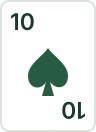
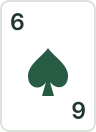
Dealer
Basic-strategy decision
Hit
Hard 16 hits against 10 when surrender is unavailable.
Three ways to start

Check the Table Rules Before Choosing Your Strategy
Blackjack games do not all use the same rules. Before sitting down, check the number of decks, the blackjack payout and whether the dealer hits or stands on soft 17.
Also check whether you can double after splitting, which hands qualify for doubling, whether surrender is available and what restrictions apply to split aces. These details can change the correct decision.
The strategy tables below assume a conventional four-to-eight-deck game in which the dealer stands on soft 17 and checks for blackjack when appropriate. Doubling is available on any initial two cards. Splitting recommendations distinguish between games that allow doubling after splitting and those that do not.
If your table uses different rules, use a chart made for that game. In particular, a dealer-hits-soft-17 game requires several adjustments.
Same dealer hand: soft 17
- S17
- Dealer stands
- H17
- Dealer hits
Understand What Basic Strategy Can Achieve
Basic strategy compares your hand with the dealer’s visible card and identifies the action with the best expected result under the relevant rules.
Sometimes that means choosing the option that loses less on average. Standing on a weak total can therefore be correct even though the hand feels uncomfortable.
For example, standing on hard 13 against a dealer’s 6 may seem passive. However, drawing another card risks busting before the dealer has to complete their hand.
The aim is to make the correct decision repeatedly. A single winning or losing hand does not prove that a decision was good or bad.
Basic strategy is also the foundation for more advanced approaches, including card counting. However, using a basic strategy chart alone does not create the advantage associated with successful advantage play.
Player: hard 13
Dealer upcard: 6
Stand
For the article’s S17 game. A correct decision can still lose.
Use the Dealer’s Upcard to Guide Hard-Hand Decisions
A hard hand has no ace counted as 11. A hand containing an ace can still be hard if that ace must count as 1.
A useful starting point is to remember three standing thresholds: against a dealer’s 2 or 3, stand on hard 13 or higher; against 4, 5 or 6, stand on hard 12 or higher; against 7 through ace, stand on hard 17 or higher.
These are hit-or-stand guidelines. Check whether splitting, surrendering or doubling applies before using them.
| Your hard total | Stand against | Hit against |
|---|---|---|
| 11 or less | None | Any upcard, unless doubling |
| 12 | 4–6 | 2–3 and 7–ace |
| 13–16 | 2–6 | 7–ace, unless surrendering |
| 17–21 | Any upcard | None |
Do not let another player’s impatience change your decision. You are not required to take an extra card to make the game more exciting.
Player
Dealer upcard
Hit
Player
Dealer upcard
Stand
Treat Soft Hands Differently
A soft hand contains an ace counted as 11. For example, ace–6 is soft 17.
The flexible ace changes the risk of taking another card. If the next card would otherwise cause a bust, the ace can count as 1.
That is why soft 17 and hard 17 should not be played the same way.
| Your soft hand | Recommended action |
|---|---|
| Ace–2 or ace–3 | Double against 5–6; otherwise hit |
| Ace–4 or ace–5 | Double against 4–6; otherwise hit |
| Ace–6 | Double against 3–6; otherwise hit |
| Ace–7 | Double against 3–6; stand against 2, 7 or 8; hit against 9, 10 or ace |
| Ace–8 or ace–9 | Stand |
If doubling is unavailable, hit soft 13 through soft 17. With soft 18 against 3–6, stand instead.
These hard- and soft-hand decisions correspond to the dealer-stands-on-soft-17 framework used here.
Soft 17
Double against 3–6; otherwise hit.
Soft 18
Double against 3–6; stand against 2, 7 or 8; hit against 9, 10 or ace.
Double Down When the Hand Justifies the Extra Bet
Doubling down increases your wager in exchange for receiving only one additional card.
It should follow the strategy for your hand and the dealer’s upcard. Doubling because you have lost several hands, feel confident or want to recover money does not improve the decision.
For hard totals, use the following rules:
| Your hard total | Double against | Otherwise |
|---|---|---|
| 9 | 3–6 | Hit |
| 10 | 2–9 | Hit |
| 11 | 2–10 | Hit |
The soft-hand doubling situations appear in the previous table.
To double at a physical table, place the additional chips beside your original wager and clearly indicate your intention. Do not stack the additional wager on top of the original bet.
Some casinos permit doubling for less than the original stake. That option does not mean a smaller double has the same expected value as a full double when doubling is favourable.
Starting total: 11
$10 original wager
Add $10 → total stake $20
Final total: 20
One additional card only. The hand is complete.
Know Which Pairs to Split
Splitting turns an eligible pair into two separate hands. You place an additional wager equal to the original bet, and each card becomes the starting card of a new hand.
Whether doubling after splitting is available affects several pair decisions.
| Pair | Split when doubling after splitting is allowed | Split when doubling after splitting is not allowed |
|---|---|---|
| Aces | Against every upcard | Against every upcard |
| 2s or 3s | Against 2–7 | Against 4–7 |
| 4s | Against 5–6 | Do not split |
| 5s | Do not split | Do not split |
| 6s | Against 2–6 | Against 3–6 |
| 7s | Against 2–7 | Against 2–7 |
| 8s | Against every upcard | Against every upcard |
| 9s | Against 2–6, 8 or 9 | Against 2–6, 8 or 9 |
| 10-value cards | Do not split | Do not split |
When the table says not to split, play the combined total according to the hard-hand strategy. For example, two 5s make hard 10.
The pair decisions and hard-total doubling rules above match the S17 strategy chart.
Original hand
$10 original wager
Add $10 → total stake $20
First split hand
$10 wager
Second split hand
$10 wager
What Happens After a Split
The dealer separates the cards and deals additional cards according to the table procedure. You normally play each resulting hand separately.
Important restrictions may include a limit on the number of hands created by resplitting, restrictions on resplitting aces, only one additional card for each split ace, and no doubling after splitting.
An ace followed by a ten-value card after a split normally counts as ordinary 21. It does not receive the natural-blackjack payout.
In a face-up game, leave the cards for the dealer to separate. In a face-down game, expose the pair and follow the dealer’s instructions.
Use Surrender When the Rules and Hand Call for It
Surrender allows you to give up an eligible hand and lose half the original wager.
With late surrender, the option applies after the dealer has checked for blackjack where the game requires that check. It is normally available only on your initial two cards, before you hit, double or split.
For the S17 game described here:
| Initial hand | Dealer upcard | Action |
|---|---|---|
| Hard 15 | 10 | Surrender |
| Hard 16, excluding 8–8 | 9, 10 or ace | Surrender |
Under this framework, split 8–8 rather than treating it as an ordinary hard 16.
If surrender is unavailable, follow the appropriate hit-or-stand decision. Different rules, particularly dealer-hits-soft-17 games, can change surrender recommendations.
Ask the dealer how to indicate surrender. Do not assume that every casino uses the same gesture or offers the option against the same upcards.
Hard 16 against dealer 10
- Original wager
- $10
- Returned
- $5
- Loss
- $5
Understand the Cost of Insurance
Insurance is a separate wager offered when the dealer shows an ace. It wins if the dealer’s hidden card has a value of 10, giving the dealer blackjack.
A winning insurance bet normally pays 2 to 1. That payout requires the probability of a ten-value hole card to exceed one-third for the wager to have a positive expected value.
The insurance decision is therefore about the unseen cards, not whether your own hand feels worth protecting.
- Main wager
- $10
- Separate insurance
- $5
If the hole card is ten-valued and the player has no blackjack: main bet −$10; insurance profit +$10; net $0. The $5 insurance stake is also returned.
A Corrected Insurance Example
A standard deck contains 16 ten-value cards out of 52 cards, a proportion of 4 in 13.
Using that proportion as a simplified illustration, consider thirteen $5 insurance wagers with four wins and nine losses.
| Item | Calculation | Amount |
|---|---|---|
| Total amount wagered | 13 × $5 | $65 |
| Profit from four wins | 4 × $10 | $40 |
| Loss from nine losing bets | 9 × $5 | $45 |
| Net result | $40 − $45 | −$5 |
| Loss as a share of total wagers | $5 ÷ $65 | Approximately 7.69% |
This is an illustration, not a prediction that every thirteen bets will produce those results.
It also simplifies the card composition. Once the dealer’s ace is visible, it has already been removed from the unseen cards. Your own cards and other exposed cards change the probability further.
For ordinary basic-strategy play, decline insurance. Advanced counting methods may identify exceptions, but a feeling that the dealer is “due” for blackjack provides no such information.
Learn a Short Version Without Mistaking It for the Full Strategy
A simplified strategy can help beginners organise their decisions. However, shortcuts leave out situations that matter.
Some quick guides suggest hitting hard 12–16 against 7 or higher, standing on soft 18 or higher, doubling 10 or 11 when the dealer has a lower card, splitting 8s and refusing insurance.
Several qualifications are essential:
| Shortcut | Necessary qualification |
|---|---|
| Stand on hard 12–16 against a low dealer card | Hard 12 should be hit against 2 or 3 |
| Stand on soft 18 or higher | Soft 18 should be hit against 9, 10 or ace and doubled in certain other situations |
| Double 10 or 11 against a lower dealer card | Treat an ace as a strong upcard, not as the number 1 |
| Surrender 16 against 9, 10 or ace | Pair 8–8 requires separate treatment |
| Split 8s | Other pairs, including aces, also have important splitting rules |
| Never take insurance | Appropriate for ordinary basic-strategy play |
A short practice session can introduce these decisions, but it cannot guarantee accurate play. Nor does a simplified blackjack strategy apply to other casino games.
Practise with the complete chart until the exceptions become familiar.
Player
Dealer upcard
Hit
Soft 18 is not an automatic stand.
Make Your Decisions Clear to the Dealer
Knowing the correct action is only part of playing at a physical table. You also need to communicate it clearly.
In a face-up game, a tap on the table normally requests another card. Leave the cards where the dealer placed them.
In a face-down game, a light scraping motion with the cards may be used to request a hit. Ask the dealer to demonstrate the accepted signal before playing.
After receiving another card, reassess the hand. Continue hitting only when the strategy calls for it.
For doubling and splitting, keep the additional wager separate from the original stake and make your intention clear before moving chips.
Face-up cards stay on the table
Face-down handling follows house procedure
Keep Casino Distractions Out of Your Decisions
Music, conversation, drinks and nearby games can make it harder to concentrate. Even familiar decisions become easier to miss when your attention is elsewhere.
Complimentary food and drinks are part of the casino’s hospitality and marketing. They do not improve the odds of your next hand or justify spending more than planned.
Choosing a non-alcoholic drink can help you maintain the attention needed to follow your strategy and budget.
Other players may also offer strong opinions about your decisions. Their confidence does not make their advice correct. Follow a chart suited to the game and ask the dealer about procedures when necessary.
A friendly dealer or smaller casino does not automatically mean better playing conditions. Check the actual rules. The point at which a shoe is shuffled can matter to card counters, but it does not turn ordinary basic-strategy play into a winning system.
Set a Budget Without Confusing It With an Advantage
A betting unit is a reference amount, usually your normal base wager.
If one unit is $5, the following bankroll figures apply:
| Number of units | Value at $5 per unit |
|---|---|
| 400 units | $2,000 |
| 500 units | $2,500 |
| 1,000 units | $5,000 |
These are arithmetic examples, not recommended amounts to bring to a casino.
Risk-of-ruin percentages cannot be established from bankroll size alone. They require assumptions about the player’s edge, betting pattern, variance, playing horizon and stopping conditions.
A larger bankroll does not reverse the negative expectation of ordinary blackjack.
Table stakes can vary widely, so choose a game that fits a predetermined entertainment budget. A run of losses does not make a win due, and increasing your wager does not guarantee recovery.
- 400 units
- $2,000
- 500 units
- $2,500
- 1,000 units
- $5,000
Better decisions
Know the rules
before the move.
A strategy chart is only useful if it belongs to the game you are learning.
Read the blackjack rules →Go deeper, one decision at a time
Soft 17 blackjack and hard vs soft hands
Explore the guide 02When to double down in blackjack
Explore the guide 03When to split pairs in blackjack
Explore the guide 04Blackjack surrender explained
Explore the guide 05What is insurance in blackjack?
Explore the guide 06Blackjack odds and house edge
Explore the guide 07Blackjack betting strategy and systems
Explore the guide 08How Blackjack Card Counting Works
Explore the guide 096 deck blackjack strategy and rule changes
Explore the guide 10Online blackjack strategy and game rules
Explore the guide 11Blackjack variants and their rule differences
Explore the guide 12Blackjack side bets: rules and payouts
Explore the guide 13Common Blackjack Mistakes and How to Avoid Them
Explore the guideQuestions about blackjack strategy
It depends on the dealer upcard, pair status and surrender rule. In the default S17/no-surrender chart, hard 16 stands against 2–6 and hits against 7–A. A pair of eights uses the pair decision.
No. It chooses an action under stated assumptions. The next card and the hand result remain uncertain.
No. It covers the stated conventional multi-deck peek rules. Single-deck, no-hole-card and special variants need another verified reference.