
Learn the reason behind the move
Blackjack basic strategy trainer
Practice blackjack basic strategy with free, rule-selectable drills. Focus on hard totals, soft hands or pairs, track first answers and replay missed decisions. Start with the eight-hand lesson if you are new.
Last updated:
Random blackjack strategy practice
Choose a hand family and rules, then answer 20 different starting-hand questions. Review your missed hands in a separate round. Four to eight decks, dealer peek, 3:2 blackjack and doubling on any initial two cards apply throughout.
Accuracy measures recall of this reference, not the chance of winning. Review the rule line and fallbacks for each missed decision.
Start with the eight-hand lesson
Hand 1 of 8
4–8 decks · S17 · DAS · No surrender · Dealer peek
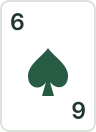
Your hand: hard 16 (10 + 6)
Dealer shows 10. What is the action?
Choose an action to reveal the explanation.
Lesson complete
Review the missed decisions, then try the lesson again.
Eight hands, one rule set
This lesson uses four to eight decks, S17, double after split, no surrender and a dealer peek. Each hand is a starting two-card hand. Choose one answer, then reveal the explanation. The sequence is fixed so you can review the same learning points.
Identify: hard 12
Dealer upcard
Compare: dealer 4
Choose → check → explain
Learn from the explanation
The score counts correct first attempts. Repeated clicks do not add points. After the last hand, review the missed examples or restart the lesson. Read the rule line before answering; a different table can require a different decision.
How to memorize blackjack basic strategy
Learn where the action changes across a row rather than memorizing a story about one winning hand. A correct decision can lose and an incorrect decision can win. Feedback should therefore compare your choice with the rule-specific strategy, not with a simulated card result.
Hard 12
Dealer 3
Hit
Dealer 4
Stand
A practical memorization routine
Study one hand family at a time. Say the hand, dealer upcard and action before checking the answer. After a mistake, explain which rule or boundary you missed rather than immediately guessing again.
- First learn hard totals and the exceptions around hard 12.
- Next learn soft totals, including soft 18’s hit, stand and double cases.
- Then learn pair decisions and the changes when double after split is unavailable.
- Finish with a mixed quiz. Review missed decisions later with the hand order changed.
1 · Hard totals
2 · Soft totals
3 · Pairs
Then mix the hand families
Blackjack strategy flashcards
Use these question-and-answer examples as a small printable flashcard set. Cover the answers before responding. All use four to eight decks, S17, DAS, dealer peek and no surrender.
The eight-hand introductory lesson keeps the same sequence. Random drills provide 20 distinct starting-hand situations per round, with a separate round for the hands you missed. Neither exercise deals out full rounds or measures casino profit.
- Hard 12 vs 4 → Stand. Hard 12 vs 3 → Hit.
- Hard 16 vs 10 → Hit. A pair of eights vs 10 → Split.
- A,7 vs 3 → Double if allowed, otherwise stand. A,7 vs 9 → Hit.
- 9,9 vs 7 → Stand. 9,9 vs 8 → Split.
- 5,5 vs 6 → Double if allowed, otherwise hit. 10,10 vs 6 → Stand.
Hard 12
Dealer upcard
Stand
Stand
S17 · DAS · no surrender
Hard 12
Dealer upcard
Hit
Hit
S17 · DAS · no surrender
Hard 16
Dealer upcard
Hit
Hit
S17 · DAS · no surrender
Pair of eights
Dealer upcard
Split
Split
S17 · DAS · no surrender
Soft 18
Dealer upcard
Double, otherwise stand
Double, otherwise stand
S17 · DAS · no surrender
Soft 18
Dealer upcard
Hit
Hit
S17 · DAS · no surrender
Pair of nines
Dealer upcard
Stand
Stand
S17 · DAS · no surrender
Pair of nines
Dealer upcard
Split
Split
S17 · DAS · no surrender
Pair of fives
Dealer upcard
Double, otherwise hit
Double, otherwise hit
S17 · DAS · no surrender
Pair of tens
Dealer upcard
Stand
Stand
S17 · DAS · no surrender
How long does learning basic strategy take?
There is no fixed number of hours that guarantees memorization. Track first-attempt accuracy across mixed hands and repeat missed boundaries after a delay. Remembering eight lesson answers is not the same as recalling every chart cell.
A useful sequence is to explain the rule assumptions, identify hand types correctly, learn the decision patterns, and then test recall without looking. Revisit S17/H17 and DAS differences separately instead of trying to memorize incompatible rule sets as one.
How the random blackjack trainer works
Select a ruleset and a hand category, then start a new drill. Changing a selector does not alter a drill already in progress: start again to apply it. Double accepts either double fallback code; read the answer to distinguish hit from stand when doubling is unavailable.
- A drill samples distinct hand-type, total and dealer-upcard combinations, rather than recreating their frequency in a shuffled shoe. Ten-value picture cards are represented by 10.
- Twenty first answers determine the score. A second click cannot improve it. The review button creates a new round containing only the missed decisions; it does not rewrite your first score.
- Surrender is available only in a late-surrender drill. Rule assumptions stay visible with every hand. The eight supported combinations all use a dealer peek and four to eight decks.
- Reloading or leaving the page clears progress. There is no account, saved profile or readiness-to-gamble certificate.
